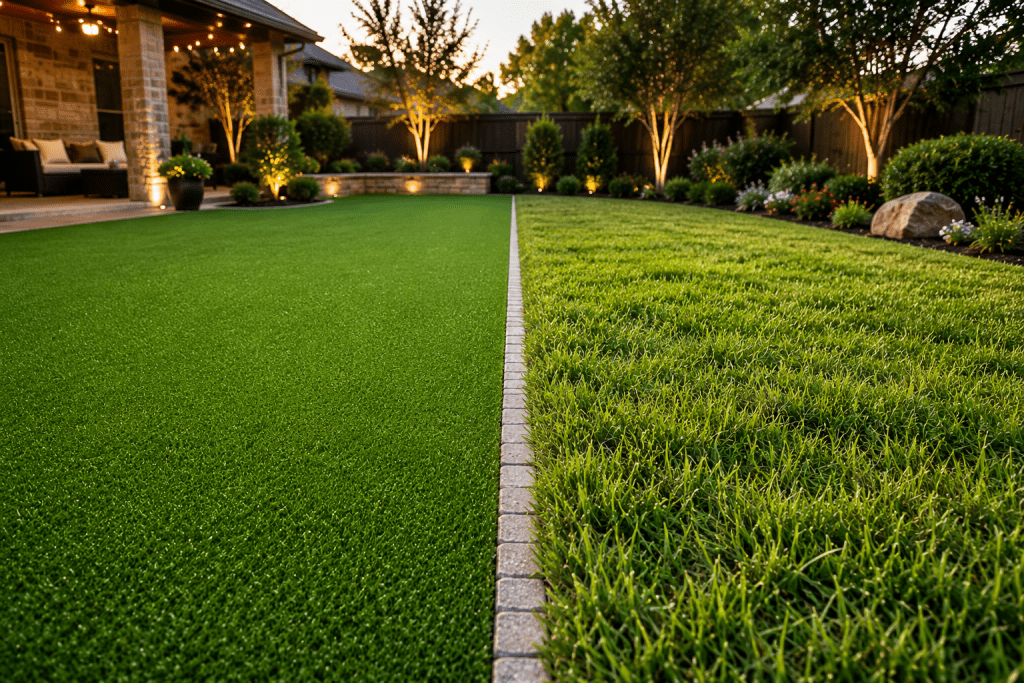
Choosing between synthetic turf and natural grass has become a major consideration for both residential and commercial property owners throughout North Texas. Water restrictions, rising maintenance costs, extreme summer heat, and increasing demand for low-maintenance landscaping solutions have all contributed to the growing popularity of synthetic turf installations.
At the same time, natural grass continues to offer benefits that many property owners still value, including natural cooling, traditional aesthetics, and softer environmental integration.
The right choice depends on several factors including maintenance expectations, property usage, long-term costs, aesthetics, irrigation requirements, and how the landscape will function throughout the year.
At Sunset Landscape Services, we help property owners throughout Garland and the Dallas–Fort Worth area evaluate both options based on the specific needs of their property, lifestyle, and maintenance goals.
The Appeal of Natural Grass
Natural grass remains the traditional standard for lawns and landscaped properties.
A healthy natural lawn can provide:
- A classic appearance
- Natural cooling effects
- Soft ground cover
- Environmental benefits
- Improved drainage
- Organic integration with surrounding landscaping
Many homeowners prefer the feel and appearance of natural turf, particularly in residential environments where outdoor recreation and traditional curb appeal are priorities.
However, maintaining healthy turf in North Texas requires significant ongoing maintenance and irrigation management.
The Challenges of Natural Grass in North Texas
Texas weather creates several challenges for maintaining healthy lawns.
Common issues include:
- Extreme summer heat
- Drought conditions
- Water restrictions
- Weed pressure
- Brown or dormant turf during hot periods
- High irrigation demand
- Ongoing mowing and fertilization requirements
Maintaining a lush lawn year-round often requires:
- Frequent watering
- Seasonal fertilization
- Weed control
- Aeration
- Mowing
- Irrigation maintenance
These ongoing requirements contribute to both maintenance costs and time commitments.
Why Synthetic Turf Has Become More Popular
Modern synthetic turf systems have improved dramatically over the past decade.
Today’s products are designed to look far more natural while offering significant reductions in maintenance requirements.
Synthetic turf has become especially popular for:
- HOA common areas
- Commercial properties
- Pet areas
- Residential side yards
- Pool areas
- Outdoor living environments
- High-traffic zones
Benefits of synthetic turf include:
- Reduced watering requirements
- Minimal maintenance
- Consistent green appearance
- No mowing required
- Improved durability in high-traffic areas
- Cleaner appearance year-round
For many property owners, these benefits outweigh the higher initial installation cost.
Maintenance Differences
One of the biggest differences between synthetic turf and natural grass is ongoing maintenance.
Natural Grass Requires:
- Weekly mowing
- Irrigation management
- Fertilization
- Weed control
- Seasonal treatments
- Pest management
- Aeration and overseeding
Synthetic Turf Requires:
- Occasional rinsing
- Debris removal
- Periodic grooming or brushing
- Infill maintenance when necessary
Synthetic turf dramatically reduces routine maintenance requirements, making it attractive for busy homeowners and commercial properties seeking cleaner long-term presentation.
Water Conservation Considerations
Water conservation is one of the strongest arguments in favor of synthetic turf.
Because synthetic turf requires little or no irrigation, property owners can significantly reduce water usage.
This can provide:
- Lower water bills
- Reduced irrigation maintenance
- Better drought resistance
- Compliance with watering restrictions
For commercial properties and HOAs managing large landscape areas, water savings can become substantial over time.
Heat Considerations
One important factor many property owners overlook is surface temperature.
Synthetic turf can become significantly hotter than natural grass during extreme summer heat.
Proper installation techniques, shading strategies, and product selection help minimize this issue, but it remains an important consideration for:
- Play areas
- Pet areas
- Outdoor gathering spaces
- Full-sun exposure zones
Natural grass generally remains cooler under direct sunlight.
Cost Considerations
Synthetic turf typically involves a higher upfront investment than natural sod installation.
However, many property owners offset this over time through:
- Reduced water usage
- Lower maintenance costs
- Elimination of mowing
- Reduced fertilizer and chemical expenses
Long-term value depends heavily on:
- Property usage
- Maintenance expectations
- Landscape goals
- Installation quality
Choosing the Right Solution
There is no universal answer for every property.
Some homeowners prefer a hybrid approach that combines:
- Natural turf in primary lawn areas
- Synthetic turf in side yards or high-traffic zones
- Artificial turf near pools or outdoor living areas
Commercial properties and HOAs may also combine both materials depending on maintenance goals and budget priorities.
At Sunset Landscape Services, we help property owners evaluate practical, long-term solutions that fit both aesthetic and operational goals.
Conclusion
Both synthetic turf and natural grass offer advantages depending on the needs of the property. Natural grass provides a traditional appearance and cooling benefits, while synthetic turf offers lower maintenance requirements and improved water efficiency.
The right solution depends on how the landscape will be used, maintained, and enjoyed over time.
Sunset Landscape Services provides professional synthetic turf installation, landscape design, irrigation solutions, and residential and commercial landscape services throughout Garland and the Dallas–Fort Worth area.